
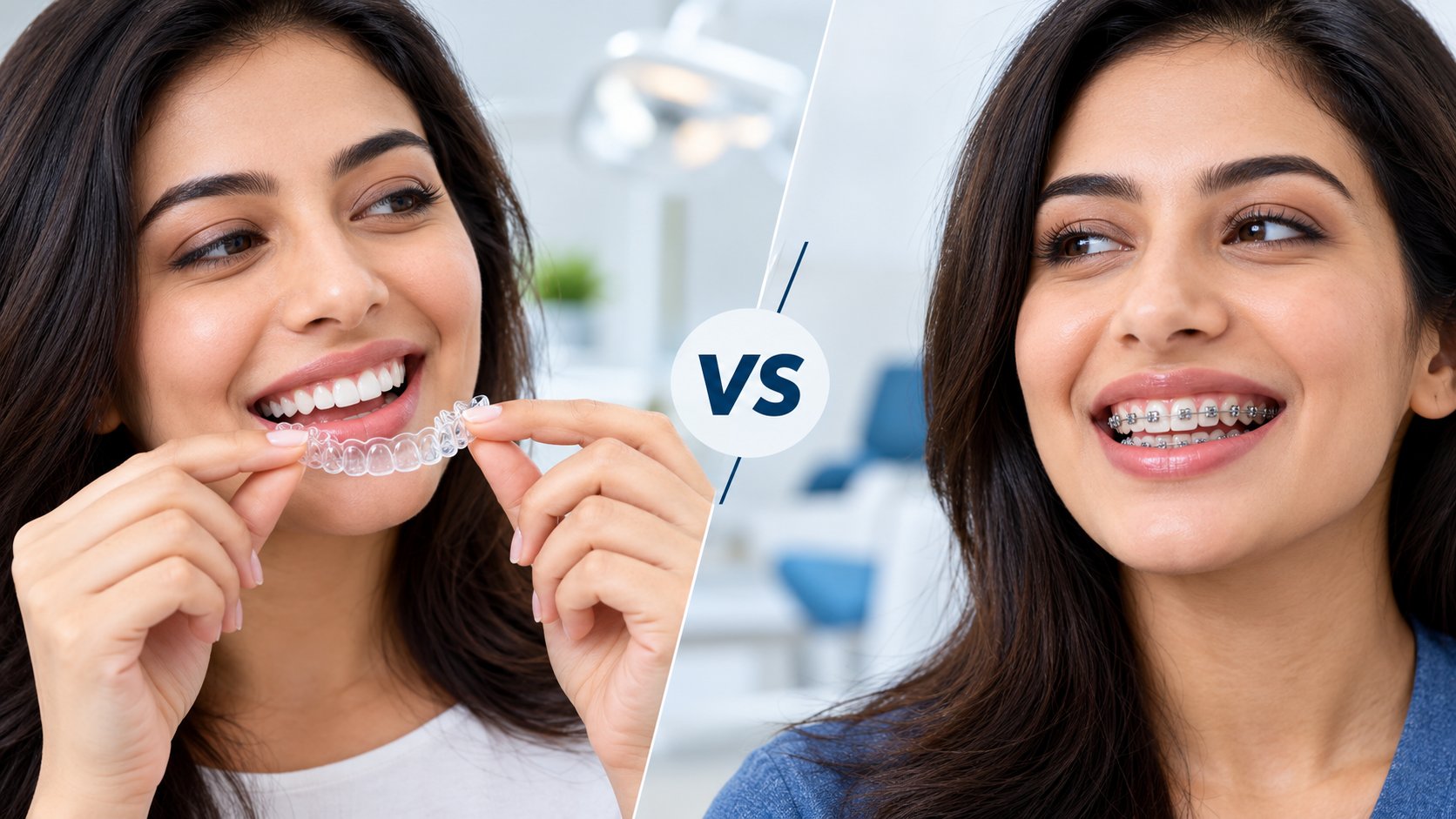
A confident smile can make a lasting impression. Whether you're considering orthodontic treatment for yourself or your teenager, choosing between Invisalign and traditional braces is an important decision.
Both treatments are designed to straighten teeth, improve bite alignment, and support better oral health. However, they differ in appearance, comfort, maintenance, and suitability for different orthodontic needs.
At Dr. Gandhi Dental Clinic & Implant Centre, Anand, we believe that understanding your treatment options is the first step toward achieving a healthier, more confident smile.
What Is Invisalign?
Invisalign is a modern orthodontic treatment that uses a series of custom-made, transparent, removable aligners to gradually move teeth into their desired positions.
Unlike traditional braces, Invisalign aligners do not require metal brackets or wires. The aligners are designed to fit closely over your teeth, making them a discreet option for orthodontic treatment.
Key Benefits of Invisalign
- Nearly Invisible Appearance: Clear aligners are less noticeable than traditional metal braces.
- Removable Convenience: Aligners can be removed while eating, drinking beverages other than water, brushing, and flossing.
- Comfortable Design: Smooth plastic aligners generally cause less irritation to the cheeks and lips than metal brackets.
- Digital Treatment Planning: Digital technology helps plan tooth movements and visualize the intended treatment outcome.
- Easier Oral Hygiene: Removable aligners allow you to maintain your regular brushing and flossing routine.
For effective results, Invisalign aligners generally need to be worn for 20–22 hours per day, as directed by your treating dentist.
What Are Traditional Braces?
Traditional braces are a well-established orthodontic treatment that uses brackets attached to the teeth and orthodontic wires to gradually guide teeth into better alignment.
Modern braces are effective for treating a wide range of orthodontic concerns, including crowded teeth, spacing, and complex bite problems.
Key Benefits of Traditional Braces
- Effective for Complex Cases: Braces can provide precise control over complicated tooth movements.
- Fixed Treatment System: Because braces remain attached to the teeth, patients do not need to remember to wear them.
- Suitable for Different Age Groups: Braces can be used for children, teenagers, and adults when clinically appropriate.
- Reliable Orthodontic Treatment: Traditional braces have a long history of successful use in correcting tooth and bite alignment.
However, braces require careful cleaning around brackets and wires, along with certain dietary precautions.
Invisalign vs Traditional Braces: Key Differences
Both Invisalign and traditional braces can deliver excellent orthodontic results when used for appropriate cases.
FeatureInvisalignTraditional Braces
Appearance
Nearly invisible
Visible brackets and wires
Removability
Removable
Fixed
Comfort
Smooth plastic aligners
May cause bracket or wire irritation
Eating Restrictions
Removed during meals
Certain hard or sticky foods should be avoided
Oral Hygiene
Easier brushing and flossing
Requires additional cleaning around brackets
Patient Compliance
Requires consistent daily wear
Works continuously while attached
Complex Cases
Suitable for many cases
Often preferred for certain complex cases
The most appropriate treatment depends on your individual dental condition, lifestyle, and orthodontic goals.
Which Treatment Is More Comfortable?
Comfort is one of the most common concerns among patients considering orthodontic treatment.
Invisalign aligners are made from smooth plastic and do not have metal brackets or wires. This can reduce irritation to the lips and cheeks.
However, patients may experience temporary pressure or tenderness when switching to a new set of aligners.
Traditional braces may also cause mild discomfort after adjustments, and brackets or wires can occasionally irritate the soft tissues inside the mouth.
Both treatments involve controlled tooth movement, so some temporary discomfort is normal.
How Long Does Orthodontic Treatment Take?
The duration of orthodontic treatment varies depending on several factors:
- Severity of crowding or spacing
- Complexity of bite alignment
- Age and dental development
- Individual biological response
- Consistency in wearing Invisalign aligners
- Following the recommended treatment plan
Some patients may complete treatment within several months, while more complex cases may require longer treatment periods.
Invisalign is not necessarily faster than traditional braces in every case. A clinical orthodontic assessment is necessary to estimate the expected treatment duration.
Is Invisalign Suitable for Teenagers?
Yes. Invisalign can be an effective orthodontic option for many teenagers, depending on their dental development, treatment needs, and ability to wear aligners consistently.
For younger patients, Invisalign also offers treatment options designed for certain growing smiles.
However, not every child or teenager is a suitable candidate for clear aligners. The dentist must evaluate tooth development, jaw growth, and bite alignment before recommending treatment.
Which Option Is Better for Adults?
Many adults prefer Invisalign because its clear, removable design fits conveniently into professional and social lifestyles.
Invisalign may be particularly appealing to individuals who want a discreet orthodontic solution without visible metal brackets.
However, traditional braces may be more appropriate for certain complex orthodontic problems.
The best choice is determined by clinical requirements rather than appearance alone.
What Happens After Orthodontic Treatment?
Whether you choose Invisalign or traditional braces, maintaining your results is essential.
After active orthodontic treatment, retainers are generally recommended to help prevent teeth from shifting back toward their previous positions.
Your dentist will advise you on the appropriate type of retainer and how frequently it should be worn.
Regular dental checkups and good oral hygiene also play an important role in maintaining your new smile.
Frequently Asked Questions
1. Is Invisalign painful?
Invisalign may cause temporary pressure or mild tenderness, particularly when starting treatment or changing aligners. This usually improves as your teeth adjust.
2. Can Invisalign fix crowded teeth?
Yes. Invisalign can treat many cases of crowded teeth, although suitability depends on the severity and complexity of the condition.
3. Can I eat while wearing Invisalign?
No. Aligners should generally be removed before eating or drinking anything other than plain water.
4. Are traditional braces better for severe orthodontic problems?
Traditional braces may be preferred for certain complex tooth movements or bite problems. However, treatment suitability must be evaluated individually.
5. Will my teeth remain straight permanently after treatment?
Teeth can shift over time after orthodontic treatment. Wearing retainers as recommended is important for maintaining results.
Start Your Journey Toward a Confident Smile
Choosing between Invisalign and traditional braces is not simply about appearance. It is about selecting a treatment that meets your dental needs, lifestyle, and long-term oral health goals.
At Dr. Gandhi Dental Clinic & Implant Centre in Anand, we help patients explore suitable orthodontic treatment options through personalized dental assessments.
Whether you're considering clear aligners for yourself or orthodontic care for your teenager, our team can guide you through the available options.
Book Your Orthodontic Consultation Today
Dr. Gandhi Dental Clinic & Implant Centre
212, Krishna Shrey Complex, Besides New Sanket Sales, Anand
Call: +91 966 251 9619